What a fun date to write – and for the rest of the month, we have palindromes! From now on, I think for organizations sake, I’ll be using the date as my blog heading.
I awoke this morning to no Internet. I couldn’t check the weather, read the news, emails, etc. For a hot minute, I worried it had something to do with Putin. I’m kidding, but not really. He IS a madman, and I AM in Europe.
As it turns out, it was my apartment building that lost service. Class was nonstop fast pace as usual, so I couldn’t check in with the world till this afternoon. Home now, and the Internet is back on, and I can re-connect. It sure makes one think about how different communication was not so long ago. I sure got used to the immediacy of my iPhone! And I may be lost in my adventure, diagramming sentences in French here, but I do like to stay in touch with world events.
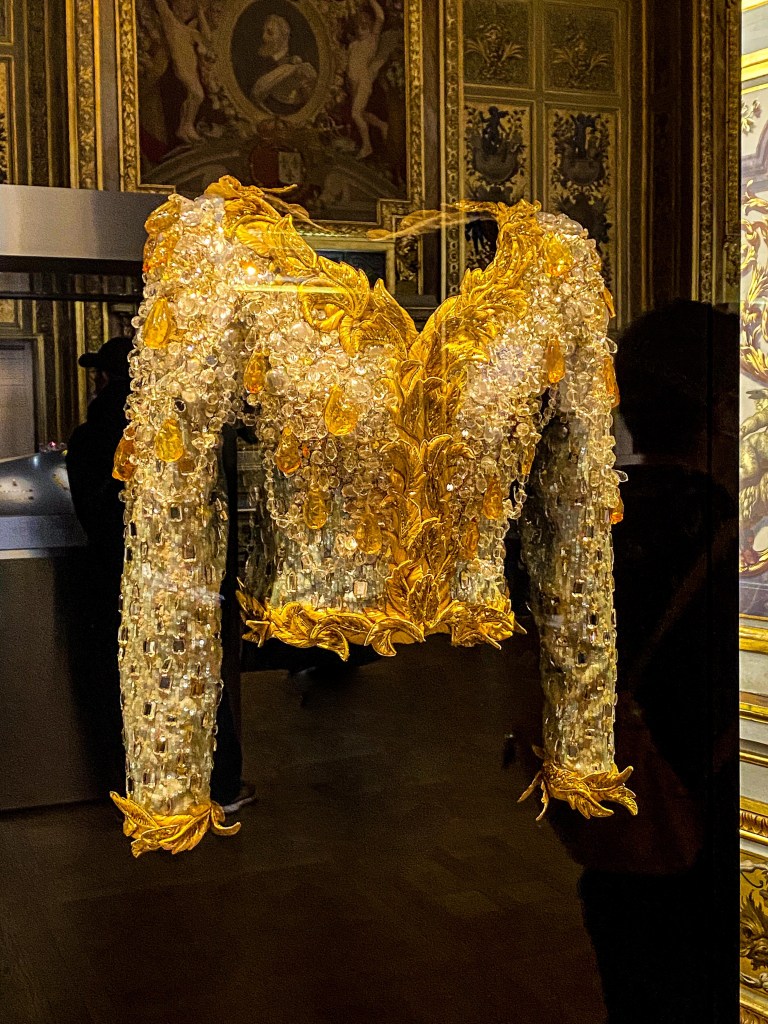
Tomorrow, I’m all signed up to watch a film about Yves St. Laurent at the theatre on campus. Those of you who follow me in Instagram, may have seen a photo I posted from my recent visit to Le Musée du Louvre. where some of his work is being exhibited. I’m looking forward to this after-school activity and wonder if they’ll serve wine with popcorn.
On another note, how could I have studied French for so many years without coming across the simple relative pronom « dont »? It’s not the American contraction, “don’t.” En français Dont replaces a complement verb/noun. Translated, it means: for which/of which/in which, or for whom, whose.
Par exemple:
C’est un écrivain dont tout le monde parle. (He is a writer for whom all the world speaks.)
La façon dont il parle est très agréable. (The way in which he speaks, is very pleasant.)*
I do love when the order of words in French aligns or matches the rhythm in English. Trust me, it doesn’t happen a lot, but it makes it easier when it’s so straightforward, as in the above two sentences using dont.
Examples of when the rhythm doesn’t quite match:
The kitchen cupboards:
Kitchen cupboards: les placards de la cuisine (the cupboards of the kitchen)
He gives me a gift: Il me donne un cadeau. (He me gives a gift)
She calls me every day: Elle me téléphoner tous les jours (She me calls all the days)
And when I asked a docent at Le Musée du Louvre for assistance when I was looking for Yves St. Laurent’s exhibit: Can you help me, please: Est-ce que vous m’aider, s’il vous plaît? (Is it that you me to help, if it you pleases).
End of lesson.
 LisaH in Paris